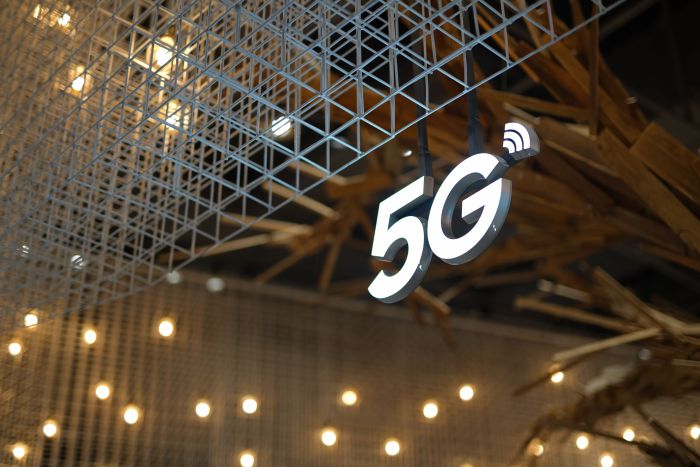
Introduction to the Rise of 5G Technology
The Difference Between 5G and Other Generations of Wireless Technology
Each new generation of wireless technology has introduced some innovative features. In particular, 1st generation technology was used for the purpose of mobile phone calls. 2nd generation allowed people to text. 3rd generation provided mobile internet, whereas 4th generation became popular due to its application to social media and video streaming in smartphones.
As for 5G technology, it is characterized by much more innovative features compared to the previous ones. Namely, it provides the ability to create a completely interconnected ecosystem in contrast to 4th generation, which is mostly applied to the purpose of using smartphones. 5G technology uses advanced radio frequencies, intelligent network architecture, and cloud-based infrastructure.
One of the key differences between 5G technology and other generations of wireless technology is that while 4G technology was designed for the needs of human communication, 5G technology is applicable both to humans and to machines. It means that self-driving cars, industrial robots, smart sensors, wearables, and so forth can communicate through the 5G network simultaneously without putting pressure on it.
To illustrate the main difference between 4G and 5G technology, it is possible to use an analogy with a highway with several lanes. When traffic is heavy on a 4G highway, there is some congestion and slow speed of data transfer. In turn, 5G is similar to the transportation system of the future that contains special lanes and much higher capacities.
Global Expansion of 5G Networks
It is possible to say that the global expansion of 5G networks has become one of the fastest expansions of technologies in the history of humankind. Countries of different continents have spent millions of dollars on the purpose of infrastructure upgrade for 5G technology.
Namely, according to industry data, the expansion of 5G connections exceeded one billion faster compared to any other mobile generation ever existed. For instance, by 2025, it is supposed to exceed 2.25 billion, which is 4 times higher compared to the 4G LTE in a similar period of deployment.
In particular, China, South Korea, the USA, India, and Germany have become leaders of deployment. For example, India managed to reach the number of more than hundreds of million of 5G subscribers.
Key Features of 5G Technology That Drive Innovation
Ultrafast Speeds and Increased Bandwidth
Probably, the feature that attracts most attention of 5G technology users is the high speed of data transfer. For example, the downloading rate is several times higher compared to traditional 4G technology. It means that huge files can be downloaded much quicker than with the help of 4G network.
Increased bandwidth is especially beneficial for the situation when several users need to gain access to the network resources simultaneously without any performance issues. Thus, this feature is very useful in cases of congestion, for instance, in stadiums and airports.
Low Latency and Improved Data Transfer
The concept of latency is related to the time of data transfer between device and server. There are some issues related to traditional technologies, namely, there is a problem of delays in the data transferring.
In case of 5G technology, such issue does not appear. It means that such networks allow implementing technologies that require immediate data transmission and communication. For example, doctors can operate in such way using robotic tools that are located in another city. Another example includes the situation with self-driving cars, which should act quickly depending on the traffic situation.
Such quickness of data transfer can be considered as one of the main drivers of 5G technology innovation.
Massive Machine-Type Communications
Modern technologies tend to be connected. Namely, it is possible to find a variety of smart devices (such as homes, wearable devices, sensors, and others) that require connection. The thing is that traditional networks do not have such capacity.
On the contrary, 5G networks can connect a lot more devices within the certain area without any performance issues. Industry forecasts show that in the course of ten years the number of enterprise IoT connections may grow due to the scalability and reliability of 5G network.
In what Way 5G Transforms Industries
Healthcare and Telemedicine
Probably, the sphere that is influenced by 5G technology to the greatest extent is healthcare. Nowadays, remote consultations, telemedicine platforms, and various connected devices can be applied effectively because of high performance.
Doctors can immediately get patient’s record, monitor his or her vital signs, and consult the specialist in the remote mode. Moreover, it is a great possibility for those who live in rural communities since it makes the advanced healthcare service available irrespective of the geographic location.
Furthermore, there are often big files that contain medical imaging. Due to 5G technology, such files can be transmitted immediately between hospitals to accelerate the process of making diagnosis and planning treatment. It is also possible to use the information from connected ambulance for preparing the patient’s file in advance.
Manufacturing and Smart Factories
Modern manufacturing facilities become smarter, highly automated, and highly connected. In such a way, they contain various industrial robots, sensors, machine learning systems that are connected in order to communicate.
Thus, it is possible to monitor performance of the machines immediately and get information about potential failures. Such predictive maintenance can help to prevent failures and reduce cost of operation.
Another innovation that can be implemented in modern smart factories is flexible production systems, which can work together automatically and adjust the process depending on the demand.
Transportation and Self-Driving Cars
It is possible to say that the transportation sector is transformed greatly due to 5G technology. Connected cars can communicate with each other and get information about road conditions, traffic, weather, and so on.
In addition, self-driving cars require constant communication with infrastructure and other vehicles. Such ultra-low latency allows acting quickly depending on the circumstances.
In addition, public transportation can be optimized in terms of routes and congestion with the help of 5G technology.
Agriculture and Precision Farming
At first sight, agriculture may not seem to be associated with 5G technology. However, such technology allows innovating farming practices.
In particular, sensors can be applied to collect information about soil condition, crops, weather, irrigation, and so on in real time. The farmer gets such information in order to increase yield and minimize resource consumption.
Also, drones with cameras and sensors can check huge fields and find the potential problems in advance.
Impact of 5G Technology on Consumers
Improved Mobile Experience
It is possible to say that ordinary users get improved mobile experience with the help of 5G technology since the download rate, quality of video calls, and other applications are much higher.
Moreover, the majority of consumers use cloud-based services for storage, productivity, and entertainment. In this case, 5G technology makes cloud-based applications more efficient because users depend less on the local hardware.
Entertainment and Gaming Innovated
There are many applications of 5G technology in the entertainment sector. Streaming services can offer higher-quality video without any buffering even during peak times.
Moreover, it is possible to use the 5G technology for cloud gaming since it offers the possibility to play the game without buying expensive gaming hardware.
Moreover, virtual reality and augmented reality can become more common due to the sufficient bandwidth and fast processing of data.
Remote Work and Education Revolutionized
The recent shift to the remote work and education made people understand the significance of reliable connectivity. For instance, employees require access to video conferencing, cloud applications, collaboration tools, and so on in order to avoid interruptions.
However, 5G technology can meet all of these requirements offering stable and fast connections in various locations. Students can benefit from the same possibilities to have access to learning resources and virtual classes.
As a result, connectivity plays a crucial role in the development of digital learning.
5G Technology and IoT
Smart Cities Using Connected Infrastructure
There are a lot of aspects of smart cities, which are connected to the connectivity infrastructure. Namely, it is traffic management system, environmental sensors, public safety, and utilities services, which produce a lot of data.
Due to the 5G technology, these systems can operate effectively due to reliable data transfer channels and real-time analytics. City managers can check traffic flow, reduce energy consumption, and improve the time of response in case of emergency.
Connected infrastructure also helps to implement sustainability programs since it allows optimizing resource usage.
Connected Home and Devices
Today the modern home usually consists of connected devices, which provide a comfortable living for people (smart thermostats, security cameras, voice assistants, lighting and appliances, and others).
Due to 5G technology, such devices can operate effectively because of fast data transfer. As the number of connected devices grows, it becomes important to have enough capacity in the network.
Thus, it leads to the more responsive living environment that can change according to the users’ preferences.
Barriers to Global 5G Deployment
Costs and Difficulties in Infrastructure Deployment
Despite all benefits of the 5G technology, it is possible to distinguish some barriers to its deployment. First of all, it is necessary to invest money in building and upgrading the network, which is quite costly.
Dense urban areas require additional small-cell deployment for increasing the performance and coverage. Besides, there are some barriers in the rural areas due to economic and logistic reasons.
The following table shows these difficulties and their potential solutions:
Difficulties in 5G deployment Impacts Solutions
Infrastructure Cost Slow deployment Public-private partnerships
Spectrum allocation Reduced network capacity Regulation reforms
Deployment gaps in rural areas Inequal access Governmental incentives
Equipment cost Rising costs of the operators Vendor competition
Such obstacles should be overcome to achieve the universal access to 5G network.
Security and Privacy Problems
With the development of the connectivity, it becomes increasingly important to consider the security of the infrastructure. The increased number of connected devices means the increased number of opportunities for potential attacks.
Companies need to develop robust systems of security and protection of sensitive data and critical infrastructure. The most important part of such systems is encryption and network monitoring and AI-powered threat detection.
Privacy concerns should also be considered among consumers since they get more connected devices in their homes and workplaces.
Future of 5G and Further Technologies
The Appearance of 5G Advanced
It is possible to state that the development of 5G technology is not over yet. Namely, industry leaders pay attention to 5G Advanced technology, which implies some enhancements and integration of artificial intelligence into the network.
Experts believe that such technology will allow using the industrial applications, improve IoT and network automation. Major technology companies and operators invest considerable money in these innovations.
The combination of AI and 5G technology will bring up new business models and services.
Transition to 6G
Besides, researchers have already begun considering the technologies of 6G. Some early concepts of such technology include extremely high speeds, intelligence, and integration of physical and digital worlds.
According to industry forecasts, 5G technology will be used for the whole decade to become the basis of future technologies.
Conclusion
The advent of the 5G technology revolutionizes the connectivity worldwide allowing the innovative ways of communication between people, devices, and industries. Its features such as ultra-fast speeds, low latency, and massive connectivity capacity allow implementing some innovations, which previously existed only in science-fiction films. From healthcare and manufacturing to entertainment and smart cities, 5G technology opens a lot of perspectives beyond the mobile internet access.
Numbers speak for themselves – the billions of global 5G connections, commercial deployments, and further investments testify about the revolutionizing of the digital world. With the emergence of 5G Advanced and the preparation for 6G technology, the world faces the era of increased connectivity.