
Understanding the Internet of Things
What IoT Actually Is
On the surface, IoT is very simple. Objects get connected to digital systems. Such objects collect information using sensors and transmit it or act according to specific algorithms.
Imagine a thermostat measuring room temperature and activating cooling system accordingly. Or soil sensors detecting soil quality and irrigation only when needed.
IoT works due to its efficiency. There is no need for human intervention at each step.
Four Basic Layers of IoT
IoT is often based on four basic steps:
Layer Function
Devices & Sensors Collect information
Connectivity Transmit data
Processing Analyze information
Automation Trigger actions
In other words, IoT converts regular devices into intelligent ecosystems.
The Era of Connected Devices
Reasons Why IoT Became Popular
IoT didn’t develop overnight. Several technologies matured simultaneously.
First, the emergence of cloud computing made possible to store data on a larger scale. Second, sensor prices fell dramatically. Third, mobile internet spread worldwide. Fourth, wireless technologies became even faster. Fifth, AI learned to interpret data flow from device to device.
All of this provided a perfect environment for IoT systems.
Companies started to see economic benefits while customers started to enjoy convenience. It became possible to have smart houses at reasonable prices. Smart monitoring saved money in industries. Smart systems became available in healthcare.
Key Market Statistics and Forecast
The statistics demonstrate how huge this movement is.
Metric Latest Estimate
Global IoT market (2025) USD 1.59 trillion
Projected market (2033) USD 3.27 trillion
Forecast CAGR 8.9%
Connected devices (2026) 21.9 billion
Researches assume that IoT spending will exceed USD 1 trillion, and healthcare sector will be the fastest-growing.
IoT is no more an innovative technology. Now it’s the infrastructure.
IoT in Smart Houses and Everyday Life
Connected Appliances
Home has become the IoT’s playground.
Smart lights can react to routine. Refrigerators can count products. Security cameras allow you to access your home remotely. Doorbells detect any movement and send immediate notifications.
These devices are no more gadgets. Now they work as ecosystems.
Imagine that the alarm activates lights, opens blinds, changes room temperature and gives traffic updates automatically.
This makes a big difference because convenience stops being visible.
Energy Saving and Convenience
IoT is no more just about automatization.
For example, smart thermostats learn users’ behaviors. Lighting systems reduce energy when rooms are unoccupied. Appliance reduce consumption of electricity during peak periods.
Nowadays people start to worry about sustainability, and IoT helps here.
Perhaps in the future the home will stop to be “smart” because the intelligence will disappear.
IoT in Healthcare
Remote Monitoring
Perhaps IoT is the most useful tool for healthcare.
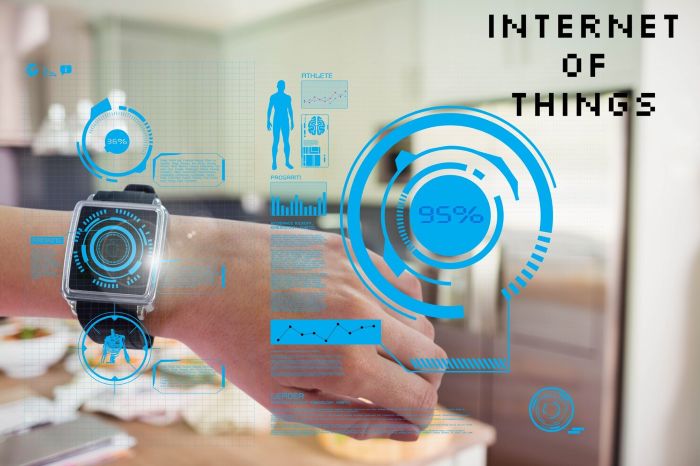
Connected devices allow to observe patients’ condition remotely. Wearables constantly monitor the activities, sleep, heart rhythm and other health parameters.
Physicians get constant feedback instead of occasional observations.
Patients with chronic illnesses are able to be observed from their homes. This decreases number of visits to the hospital and allows to intervene timely.
This explains why healthcare is going to be one of the fastest growing sectors in IoT.
Preventive Care and Wearables
Conventional healthcare usually responds after the problem appeared.
IoT provides the preventive approach.
Wearables promote constant monitoring. The IoT system sends you alerting signals. Patterns of data detect problems before symptoms appear.
As a result the healthcare model becomes more preventive rather than reactive.
IoT in Industry and Manufacturing
Predictive Maintenance
The factory used to wait until machines stopped working.
IoT changed everything.
Sensors monitor temperature, vibrations, pressure and machine performance constantly. Minor abnormalities show that there is something wrong.
Predictive maintenance helps to prevent operational interruptions and reduce repair costs.
It turns the maintenance process into the strategy.
Industrial Automation
Industrial IoT (IIoT) is transforming production environments.
Machines start to work automatically. Inventory is updated constantly. Equipment schedule depends on the demand.
Factories become more flexible and data-driven.
Nowadays, industrial systems are integrating IoT and AI to make autonomous decisions.
Smart Cities and Urban Environment
Traffic, Utility and City Services
City produces enormous amount of traffic and consumes enormous resources.
IoT brings the response into it.
Traffic signals change dynamically. Waste collection process becomes optimized. Streetlights adapt depending on the activity level.
IoT makes cities more efficient, economical and convenient.
Analysts project strong investments in the development of smart-cities worldwide due to the growth of urban population.
Cities become the operating system.
IoT and Transportation
Connected Vehicles
Car becomes a computer now.
Connected vehicles monitor vehicle performance, navigation, optimize fuel consumption and facilitate predictive servicing.
Fleet operators use IoT to track routes, increase safety and reduce operational costs.
Communication system of vehicles may become such ecosystem where cars interact directly with the surroundings.
Transportation becomes not the process of using the car but intelligent movement.
Agricultural Sector Becomes Smarter
Precision Farming
While agriculture looks like the sector that cannot be modernized, IoT transforms it now.
Sensors measure soil moisture. Weather systems predict the irrigation time. Drones monitor the field.
Farmers get precision instead of reliance on experience.
This approach increases efficiency and minimizes waste.
Smart farming shows that the IoT can change anything.
Privacy and Security Problems
Cybersecurity Threats
Each connected device is another potential way to attack.
That is a paradox of IoT.
The very connectivity that makes IoT useful also increases the threat.
According to recent reports, 48.2% of network connections of IoT and IT environments were created by high-risk IoT devices.
Experts recommend to pay attention to:
Strong authentication
Regular updates of firmware
Network segmentation
Encryption
Lifecycle management of devices
IoT security has become crucial along with IoT innovation.
The recent analyses also show that IoT-related cyber-attacks are becoming more sophisticated.
Future of IoT
AI, Edge Computing and Beyond
IoT is not just about more connections in the future. It will make devices smarter.
Edge computing will perform analysis of the data close to the device instead of doing it in the distant cloud server. AI will interpret the data instantly.
This will make decisions faster, decrease latency and increase resilience.
More and more experts start to see IoT, AI and connectivity as one ecosystem.
Imagine that the city is managing traffic, hospital is detecting health risks, factory is maintaining equipment and home is optimizing energy use.
This future is coming quietly.
Conclusion
The Internet of Things is changing the world not because devices became connected. But because connected devices became useful.
IoT has become an invisible layer under everything: our everyday life, businesses, healthcare, transportation, agriculture and city infrastructures.
The world becomes increasingly aware, responsive and automatic.
The main question is no longer whether IoT will shape the future.
It already did.