
Understanding Green Technology
What Is Green Technology?
Green technology describes any innovation developed to minimize the negative effect of humans on the environment and improve their productivity and quality of life. The category includes renewable energy systems, sustainable transportation, smart infrastructure, technologies for reduction of waste and sustainable manufacturing.
However, what distinguishes green technology from simple substitution of renewable energy sources for non-renewable is their integration into a system minimizing energy and material waste while improving efficiency and sustainability of industries.
Green technology can be considered the operating system for our planet. In the same way, a smart phone performs dozens of tasks simultaneously and efficiently, green technologies will coordinate energy generation, storage, transportation, agricultural and industrial production.
Among the most important features of green technology is that it solves a number of problems at once. For example, the smart power grid will not only decrease waste of energy but also increase reliability and reduce the price of energy supply. In turn, electric vehicles will reduce air pollution and make people less dependent on imported fuels. Finally, sustainable manufacturing technologies will reduce the amount of waste and increase profitability for the businesses.
Why Innovation and Sustainability Go Together?
From time immemorial, innovations have been the means to cope with big problems. Climate change, scarcity of resources and rapid population growth – all these issues represent the challenges that need to be addressed today.
Thus, sustainable innovation is innovation aimed at development of technologies that satisfy the needs of the modern world without compromising the needs of future generations.
Today, more and more companies recognize the significance of sustainability. Not only do consumers prefer environmentally friendly brands, investors pay attention to ESG performance of enterprises and government increases environmental regulation. Thus, companies spend huge sums on research and development of green technologies.
The interaction between innovation and sustainability creates an effective feedback loop, in which improvement of technologies results in increased efficiency, lower price and thus increased adoption. Increased adoption leads to greater investments and to further development of technologies. And this loop keeps accelerating.
The Increasing Importance of Green Technology in 2026
The Urgency of Climate Change Challenges Driving Innovation
Climate change is an urgent problem today. Rising temperature, severe weather phenomena, lack of water and disruption of ecosystems push governments, companies and citizens to act.
Green technology provides effective solutions to the problem of reduction of greenhouse gas emissions without stopping the development of the economy. Renewable energy systems, carbon capture technologies, smart buildings and sustainable transportation infrastructure help states to achieve ambitious goals concerning environment.
This period is very important for green technology because technologies of today are more cost-effective than in previous decades. Solar power, wind power, battery technologies have drastically improved and reduced their price.
Global Investments in Green Technology
The dynamics of investments proves that green technology is rapidly developing. Recently released market research suggests that the global green technology and sustainability market was worth approximately $23.1 billion in 2024 and is predicted to reach about $79.7 billion by 2030 at a 23.1% CAGR during 2025-2030.
Indicators of Green Technology Market Value
Size of the Market (2024) $23.1 billion
Estimated Size of the Market (2025) $28.1 billion
Projected Size of the Market (2030) $79.7 billion
CAGR (2025-2030) 23.1%
Governmental and private investments in renewable energy, smart infrastructure, battery technologies and climate startups have been rapidly growing. Clean energy investments continue to grow around the world as states pursue net-zero commitments and energy security goals.
Renewable Energy Revolution
New Solar Energy Technologies
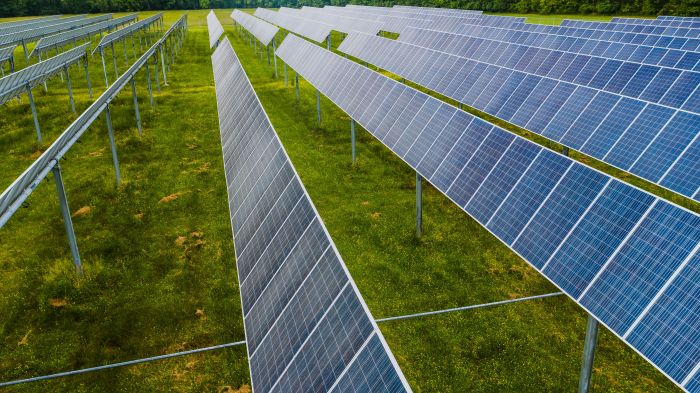
Perhaps, solar energy is the most revolutionary technology of today. Innovations in solar systems increase energy yield and reduce its price while preserving high efficiency.
According to the latest international forecasts of renewable energy capacity, the growth is expected to exceed 4,600 GW between 2025 and 2030, out of which 80% are solar photovoltaic systems.
Floating Solar Farms and Smart Solar Panels
One of the interesting innovations in this sphere is the appearance of floating solar farms. The placement of solar panels on reservoirs, lakes and other water bodies allows maximization of land use and reduction of evaporation of water. These farms benefit from cooler temperature, which increases their efficiency.
Smart solar panels with sensors and AI algorithm are able to rotate depending on the conditions of light exposure to the panel. This increases energy output and reliability of the system. With falling price of these technologies, they will have great contribution to expansion of energy production capacity.
Next Generation Wind Energy Systems
Innovation of wind energy comes from the development of bigger turbines, better materials and sophisticated predictive maintenance systems. Modern offshore wind farms are able to generate great amounts of electricity without occupying land space.
Use of AI allows monitoring of turbines’ performance in real time and thus reducing downtime and maintenance expenses. Innovative blade design allows getting more energy even in case of relatively low winds. All this together with offshore energy makes wind power an essential part of renewable energy transition.
Statistics concerning the growth of renewable energy production indicates that wind energy production plays one of the leading roles in this process.
Energy Storage Innovation
Battery Energy Storage Systems
Interruptions in supply of energy from renewable sources represents the main barrier on the way to their widespread usage. Battery Energy Storage Systems allow solving the problem of intermittency by storing the energy that was generated when there was no demand for it.
Modern battery energy systems allow stabilizing the electricity network and maximizing energy generation by renewable energy sources. Companies use large energy storage systems to balance the demand and supply without using fossil fuels as backup source.
Continuous improvement of battery technologies makes them increasingly attractive thanks to enhanced energy density, quick charging and longer lifetime. Industry analysts consider energy storage one of the most important factors in renewable energy transition.
Alternative Energy Storage Solutions
Although lithium-ion batteries dominate the market today, researchers work on alternative storage technologies including sodium-ion batteries, solid-state batteries and flow batteries. The reasons for research in these spheres include resource limitations, safety concerns, high price and negative environmental effects of lithium-ion batteries.
Sodium-ion batteries are promising because sodium is cheap and abundant. In turn, solid-state batteries allow increasing the safety and energy density of battery storage. Flow batteries excel in long-duration energy storage.
These innovations could increase storage capacity and make energy storage more sustainable and diverse in future.
Smart Grids and Intelligent Energy Management
Energy Management With AI
The electricity network was built to function unidirectionally. However, modern energy systems require much more flexibility owing to renewable generation and changed consumption patterns.
With the help of artificial intelligence, it is possible to analyze great amounts of data and make decisions in real time. AI algorithms allow predicting energy consumption, optimizing generation and detecting faults in order to increase efficiency.
Machine learning algorithms allow also prediction of breakdowns by analyzing performance of devices in advance.
Digital Twins and IoT in Energy Infrastructure
Digital twins are virtual replicas of physical objects which allow simulating their performance and detecting inefficiency. In conjunction with the Internet of things (IoT), these technologies allow analyzing performance of complex infrastructure systems.
Thus, it becomes possible to make decisions more effectively in case of power plants, transmission networks and industrial infrastructure.
Analysts increasingly recognize the importance of AI, IoT and digital twins in the development of green technology sector.
Green Transportation Technologies
Electric Vehicles and Charging Infrastructure
Transportation is one of the sectors responsible for the biggest share of carbon emissions in the world. Therefore, it became a sector where sustainability measures are actively taken.
Electric vehicles (EVs) revolutionize the transportation sector replacing traditional automobiles with clean alternative. Improvements in battery design increase the range of travel and shorten the time of charging. At the same time, expansion of the charging infrastructure makes EVs available for more people. Governments around the world stimulate the process with various policies.
There are other advantages of EVs apart from reduction of carbon emissions. These vehicles produce less noise pollution and are cheaper to operate.
In addition, falling prices on batteries make EVs increasingly competitive with traditional vehicles.
Green Hydrogen and Sustainable Mobility
One of the sustainable solutions for sectors which cannot easily be electrified, such as aviation, maritime, industrial and long-haul transportation, is green hydrogen.
Production of hydrogen using renewable energy does not produce carbon emissions.
Hydrogen fuel cells are characterized by high energy density and quick fueling. Many countries and companies invest money in infrastructure, production and research in green hydrogen.
Experts consider it one of the most important solutions for sustainable energy mix in the future.
Circular Economy and Sustainable Manufacturing
Waste to Resource Technologies
Until now, the economy followed a linear model: produce, consume, dispose. Circular economy aims at eliminating the waste and extending use of materials as much as possible.
Innovative recycling technologies, waste to energy systems and resource recovery processes transform the methods of working with materials. Organic waste can be turned into biofuels, compost and renewable energy. Waste products of industrial production can become raw materials.
These innovations not only reduce the landfilling, but also reduce the need in extracting resources and bring economic opportunities. Adopting circular approach, businesses often discover cost savings.
Eco-friendly materials and green computing
Sustainable manufacturing uses innovative eco-friendly materials which minimize environmental impact throughout the whole lifecycle of a product. Such materials include biodegradable plastics and other eco-friendly materials.
Green computing represents another fast developing sphere. It allows reducing emissions from digital infrastructure while maintaining performance.
With increasing importance of digital transformation in all spheres, it becomes extremely important to ensure that development of technologies does not contradict environmental goals.
Sustainable Agriculture and Water Technologies
Precision Farming Technologies
Growing global population puts increasing pressure on agriculture sector to increase food production with the minimum use of resources. Precision agriculture helps to solve this problem using data analysis.
Drones, satellite images, soil sensors and AI algorithms provide farmers with detailed information about crop health, irrigation needs and nutrient requirements. Thus, the waste is reduced and productivity is increased.
In addition, smart agriculture helps to reduce environmental impact by optimizing fertilization, reducing water use and decreasing greenhouse gas emissions.
Smart Water Conservation Technologies
Increasing water scarcity represents a global challenge. Smart water management systems can monitor consumption, detect leakages and optimize distribution with the help of sensors and automation.
Advanced purification technologies improve accessibility of clean water while reducing energy consumption. Desalination systems with renewable energy represent a sustainable method for water production.
Thus, digital technologies help to make water management system more efficient and sustainable.
Challenges Faced by Green Technology Adoption
Despite numerous innovations, there are still a lot of challenges faced by green technology. High price represents one of the most serious obstacles for adoption in certain regions. Besides, infrastructure gap, regulation uncertainty and supply chain issues can impede the process.
Another issue is the lack of critical minerals which are used in batteries and other renewable energy technologies. The development of skilled workforce also presents an issue because green economy requires special skills in engineering, manufacturing and technologies.
Finally, public acceptance of green technologies should not be overlooked.
Future Outlook for Green Innovation
The future outlook for green innovation seems extremely promising. Capacity of renewable energy is expanding rapidly with renewables accounting for nearly half of the world’s electricity capacity according to the latest research. Solar and wind energies are increasingly dominating the electricity mix of the world.
India will also play one of the most important roles in future of green technology market. According to the latest industry forecasts, the country will experience great growth in sustainability-related technologies owing to government policies and private sector activity.
Next decade will see breakthroughs in artificial intelligence, energy storage, carbon capture, green hydrogen, sustainable materials and climate-focused digital technologies. These innovations will transform industries, create jobs and drive sustainability goals.
Conclusion
Green technology is not a marginal phenomenon anymore. Instead, it becomes a crucial driver of economic development and sustainability. Innovations like advanced solar panels, smart energy grids, electric vehicles, green hydrogen, sustainable manufacturing, smart agriculture and water management transform industries and ways of living.
Development of green technologies is accelerating in terms of investments and falling prices. Although many challenges remain, the opportunities are enormous. Businesses, governments and people have their own role to play in sustainable innovation and acceleration of transition.