Healthy Aging: What Is It Really All About?
Healthy aging – that usually brings up thoughts of living until the late nineties or hundred. However, healthy aging is not merely the addition of years to someone’s life. WHO states that healthy aging can be seen as the development and maintenance of the functional ability that promotes well-being during aging. Simply put, healthy aging presupposes remaining active physically, cognitively, emotionally and socially with the passing years.
It should be noted that aging starts long before someone retires. The decisions and actions made by people in their twenties, thirties, forties and so on influence how they will be able to live and feel in their later years. It was stated recently that aging is the continuous process that needs the maintenance of habits and healthy lifestyle. Nutrition, exercise, stress control and sufficient sleep can significantly affect the process of aging.
In addition to that, healthy aging presupposes being adaptive. Human body changes naturally with time. However, the changes that take place automatically do not mean disability or ill-being. People remain energetic, productive and independent even in their later years owing to the maintenance of healthy behaviors. People should not fear aging, but should see it as the process which is rewarding when maintained.
Why Longevity Is Associated with Quality
Longevity sounds nice to most people. Yet, the life that lasts longer but lacks in the quality is hard to deal with. In order to avoid such situation, people need to know the meaning of the concept of healthspan.
The healthspan is the number of years a person spends in the state of being healthy, free of any serious illnesses or disabilities.
Medical achievements have helped people live much longer nowadays. WHO reports that the global life expectancy is currently 73.3 years old. However, the mere extension of lifespan is not what people need. They need to remain mobile, cognitively healthy, emotionally sound and independent during those years.
It is possible to compare the lifespan to the length of a road trip and the healthspan to the car people drive. If the vehicle is reliable, the journey is going to be pleasant. With the help of the maintenance of preventive measures and healthy behaviors people can benefit not only in terms of quantity but also in terms of quality of life.
Science of Living Longer
Genetics vs. Lifestyle Choices
One of the most frequent questions that arise when speaking about longevity is the genetic factor. Although the genetic makeup matters, it can be safely said that lifestyle decisions have a huge effect on the way how people age. Recently, studies on longevity showed that the genetic factors were responsible for the portion of the variations in lifespan, whereas environmental and behavioral factors accounted for the rest of it.
The research done in order to find the genetic factors associated with longevity has shown that people whose parents lived exceptionally long usually develop cardiometabolic diseases in several years after average people. At the same time, the specialists say that genes are not the only factors that matter.
Thus, there is no need for people to think that their aging is predestined. People should remember that lifestyle decisions are always up to them.
The Concept of Healthspan
Healthspan has become one of the most popular notions among the aging researchers. The specialists pay more and more attention to the possibility of delay in the development of the disease and the preservation of the function rather than mere increase of the lifespan.
The research conducted has shown that people who maintain healthy behaviors during their entire lives decrease the risk of suffering from heart diseases, diabetes, certain kinds of cancer and cognitive impairments. WHO identifies balanced nutrition, regular exercise and absence of tobacco use as the factors that promote healthy aging.
The point is simple: it is better to invest into healthy behaviors in order to stay independent and energetic during the last decades than to spend these decades on the treatment of the diseases that could have been avoided. Each healthy decision acts as the deposit that will bring great returns after some time.
Nutrition as the Key to Healthy Aging
Foods that Can Help People Live Longer
Nutrition is one of the most potent weapons against unhealthy aging. The foods people eat on a daily basis affect the inflammation level, metabolism, heart functions, brain activity and immune system functioning.
Most specialists recommend consuming those foods that contain a lot of fruits and vegetables, whole grains, legumes, nuts, seeds, fish and healthy fats. Such foods contain those substances which protect the body’s cells from age-related damages. The research shows the correlation between the Mediterranean diet pattern and the improvement of cognitive health.
The following table illustrates the foods that contribute to healthy aging:
Food Group Benefits for Healthy Aging
Fruits and Vegetables Rich in antioxidants and vitamins
Whole Grains Support digestive and heart health
Fish Provide omega-3 fatty acids
Nuts and Seeds Improve brain and heart health
Legumes Rich in fiber and plant protein
Olive Oil Heart healthy and anti-inflammatory
It should be mentioned that various colors of the foods are important since each of them contains certain compounds that help people.
Healthy Eating Patterns
Healthy aging presupposes not only the consumption of healthy foods but the healthy eating patterns as well. Long-term adherence to the high-quality diet has been associated with the higher chances of aging healthily and decreased risk of chronic disease.
Also, it is possible to practice the behaviors that are called mindful eating. For instance, people should listen to their hunger cues and avoid too much consumption of the processed foods and added sugars.
Hydration is also extremely important since it has a positive effect on digestion, circulation, thermoregulation and cognitive performance. However, with aging, the thirst signals start to fail that is why conscious hydration becomes necessary.
Exercise and Physical Activity
Why Exercise Is Important at Every Age
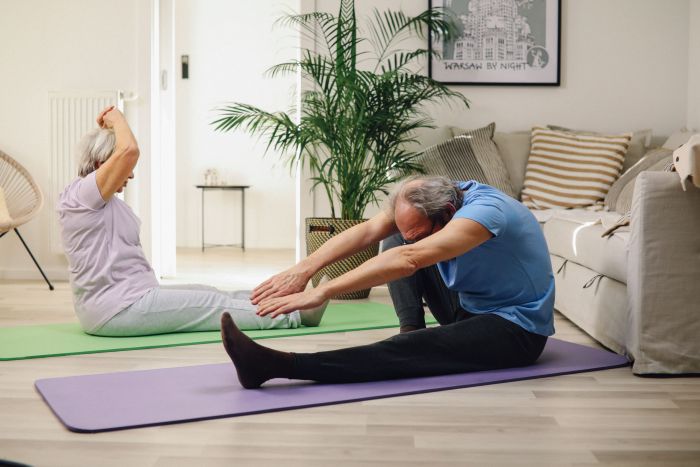
Regular physical activity can be considered as the closest thing to the miracle drug. Regular exercise helps people maintain physical fitness, strength, balance, flexibility and emotional health and also decreases the risks of developing numerous diseases that occur at the older age.
It has been proven that physical activity affects the process of aging itself. It can reduce inflammation, improve metabolic health and promote healthy cell functioning. The people who practice exercise demonstrate lower mortality rate in comparison with the sedentary people.
It is not necessary to be professional athlete in order to exercise. The walking, swimming, cycling, dancing, gardening, and recreation sport are the activities that promote healthier aging. What is most important here is the persistence.
Strength Training for Longevity
People should start to practice strength training as they age because their muscle mass starts to decrease gradually. This phenomenon is called sarcopenia and it can cause problems with mobility, balance and independence.
Strength exercises help to preserve muscle tissues, improve bone density, insulin sensitivity and physical fitness. Some of the examples of resistance training include weight lifting, resistance band workouts, bodyweight exercises, and functional training.
Cardiovascular Exercises and Aging
Aerobic exercise has a great effect on heart health, circulation and endurance. All the activities which elevate the heart rate strengthen cardiovascular system and improve oxygen delivery through the body.
Cardiovascular exercises help people reduce the risks of hypertension, heart disease, stroke and metabolic disorders. Moreover, they stimulate the secretion of certain neurochemicals and thus, improve the mood regulation.
Sleep and Recovery
The Role of Sleep in Healthy Aging
Sleep is usually neglected by people who try to lead a healthy life but forget about its importance. The fact is that sleep influences nearly every system in the body.
Experts recommend sleeping for seven to nine hours every night. The proper sleeping routines help people to maintain their metabolism, immune system, cardiovascular health, cognitive functioning and emotional stability. Also, the research suggests that healthy sleep habits contribute to longer lifespan and lower mortality rate.
Sleeping time is the time when the brain makes the necessary repairs. Thus, neurologists recommend to get good sleep because it helps people to clear waste products associated with cognitive decline and improves learning and memory.
Building Better Sleep Habits
The creation of good sleep habits does not demand any complicated interventions. Sometimes, simple actions bring good results.
The tips to improve sleep include:
Maintaining a consistent bedtime
Restricting the consumption of caffeine late in the day
Not eating heavy food before sleep
Not using screens before going to bed
Keeping the room for sleeping cool and comfortable
Also, according to recent health expert recommendations, people should stop eating food two to three hours before going to bed and use screens the last hour before sleep.
Mental and Cognitive Wellbeing
How to Maintain the Brain Function
Healthy aging presupposes not only the maintenance of physical health, but cognitive function as well. The brain should be used and trained constantly.
The activities like reading, learning, solving puzzles, playing musical instrument and having meaningful conversation stimulate cognitive flexibility. The constant learning makes the brain flexible and resistant.
The brain health is affected greatly by nutrition and exercise. The Mediterranean diet, regular exercise and healthy sleep have been associated with better cognitive performance and reduced risk of dementia.
The brain works much like the muscle: the more it is used and trained properly, the stronger and more flexible it gets.
How to Deal with Stress Effectively
Chronic stress has a great effect on nearly all systems in the human body. The elevated stress hormones increase the risk of inflammation, sleep disturbances, heart diseases and weaker immune system.
The ways to manage stress successfully include meditation, mindfulness practices, yoga, deep breathing exercises, journaling and spending time in nature. Yoga and mindful living have been recommended recently as the ways to increase resilience and promote healthy aging.
Although the stress cannot be eliminated completely, people should learn to manage it effectively. The removal of the weeds helps the plants grow.
The Power of Social Connections
Healthy Aging and Relationships
Human beings are social creatures. Good relationships help people to feel supported emotionally, give the sense of purpose and resilience during difficult situations.
It has been proven that social engagement affects positively the physical and psychological wellbeing. Good connections help people to cope with stress, keep them cheerful and motivate to maintain healthy behaviors. At the same time, social interactions help people to exercise their brain.
The family, friends, volunteering, community activities and various hobbies can help people build the social network.
Avoiding Social Isolation
Social isolation became the problem of public health lately. The experts at Johns Hopkins note that social isolation increases the risks of dementia dramatically.
The technologies can help people to keep in touch, but they should supplement but not replace the actual interactions. One can join clubs, attend community events, participate in various exercise classes or volunteer.
The good social network serves as the support in difficult situations as well as enlivens the life of a person.
Preventive Healthcare and Healthy Habits
Regular Check-ups
The preventive healthcare is crucial for healthy aging. The regular check-ups allow to detect any health problems and treat them before they become severe.
The preventive measures might include:
Monitoring blood pressure
Checking the cholesterol
Screening for diabetes
Cancer screenings
Eye and hearing exams
Vaccinations
The prevention should be viewed as the investment in oneself, not the measure taken when something goes wrong.
Elimination of Bad Habits
Healthy aging presupposes not only the acquisition of good habits, but the elimination of harmful ones.
The first step towards healthy aging is the absence of smoking. A recent study cited by the experts from Johns Hopkins has found that healthy lifestyle behaviors significantly reduce the mortality risks, and smoking cessation is especially valuable among them.
Alcohol moderation, maintaining proper weight, chronic disease management and avoidance of sedentariness are equally important. Small changes in the various lifestyle domains can give great results due to the synergy.
Conclusion
Healthy aging is not some sort of a luck that is destined to the privileged few. Although genetics plays a great role in longevity, the healthy lifestyle decisions are one of the most influential factors of how well people age. The evidence is consistent: nutritious eating, regular physical activity, quality sleep, stress management, social engagement and preventive healthcare are the pillars of longer and healthier life.
It should be mentioned that healthy aging does not start at the retirement age. It starts right now, with the decisions made with each meal, each exercise, each sleep and each connection. Aging is the inevitable process, but its quality depends on the habits that accumulate with time.