Why Professional Individuals Need Home Workouts
As a professional individual, a significant amount of time during the day is spent sitting in front of a computer. This sedentary lifestyle may cause such problems as fatigue, poor posture, weight gain, decreased mobility and high stress levels. Exercise is one of the effective solutions that help regain energy and improve health status.
It is possible to compare the human body with a high-class car. Like a car, a human body should be maintained in order to function effectively. Lack of movement will affect negatively the systems of the body, cause weakening of the muscles, etc. Regular exercise helps keep your body in optimal conditions. There are many studies proving that active people have excellent cardiovascular system, strong muscles, good mood and a low risk of various diseases.
Home workouts are convenient since they eliminate commuting time to the gym. The time necessary to go to the gym and come back home equals about one productive workout which can be done in the time necessary for watching an episode of TV show. Convenient workout means successful workout.
What Makes an Effective Home Workout
There are many kinds of workouts but it does not mean that the most effective workout is the longest one or requires the greatest efforts. On the contrary, the most effective workout is the one which you will be able to do regularly.
The time-efficient workouts involve compound movements that engage many muscle groups. Such exercises as squats, push-ups, lunges, planks and others are useful due to the ability to burn calories and strengthen different areas of the body.
Another important characteristic of an effective workout is scalability. In other words, home workouts should be adjustable according to the fitness level of the person. Beginners will do modified exercises, while advanced exercisers can increase the intensity of training by performing extra repetitions, slowing down the tempo or reducing rest period.
An effective training routine should be balanced and should involve strength training, cardiovascular exercises and mobility work. Experts claim that the combination of both types of activities is very beneficial for the health of adults.
High-Intensity Interval Training (HIIT)
Why HIIT Works
There is a great chance that this type of exercise will earn a gold medal for being extremely time-efficient. In HIIT, short bouts of effort are followed by recovery period. Such structure of the workout allows getting cardiovascular and metabolic benefits in a short period of time.
High-intensity interval training is a perfect choice for busy professionals because the workouts are relatively short and can be completed in 15-20 minutes. This method of training is often recognized as one of the most effective in terms of improving cardiovascular fitness and metabolic health.
Imagine doing the same amount of work in a short period of time. This is exactly what you will be able to achieve when performing HIIT workouts. By elevating your heart rate quickly, these exercises will help to burn calories and gain fitness benefits.
Sample 15-Minute HIIT Routine
Exercise Work Time Rest Time
Jump Squats 40 sec 20 sec
Push-Ups 40 sec 20 sec
Mountain Climbers 40 sec 20 sec
Burpees 40 sec 20 sec
Repeat Circuit 3 Rounds –
These workouts require no equipment and can be done in the living room or any other place where there is a small amount of free space. The main thing is to put effort when doing the exercises and to use the resting periods correctly.
Bodyweight Strength Training
Essential Exercises
In the majority of cases, professionals ignore the strength training because they focus only on cardio. Nevertheless, as the age progresses, it is crucial to preserve your muscle mass. Strong muscles ensure good posture, enhanced functionality, good metabolism and low injury risk.
The bodyweight training is a highly accessible way of exercising. No dumbbells, machines and gyms are required in order to perform this type of workouts. Push-ups, squats, lunges, glute bridges and planks are some of the bodyweight exercises which will allow strengthening the major muscle groups and improving coordination and balance.
The main advantage of this type of exercise is flexibility. Beginners may use the modified versions of exercises, while advanced users can increase the number of repetitions, add pauses and progress to more difficult variations.
Weekly Strength Schedule
Day Focus
Monday Upper Body
Tuesday Lower Body
Wednesday Mobility
Thursday Full Body
Friday Core & Stability
Saturday Active Recovery
Sunday Rest
This schedule ensures appropriate recovery periods and consistency. You do not need perfection. You just need to do something on a regular basis.
Mobility and Stretching Sessions
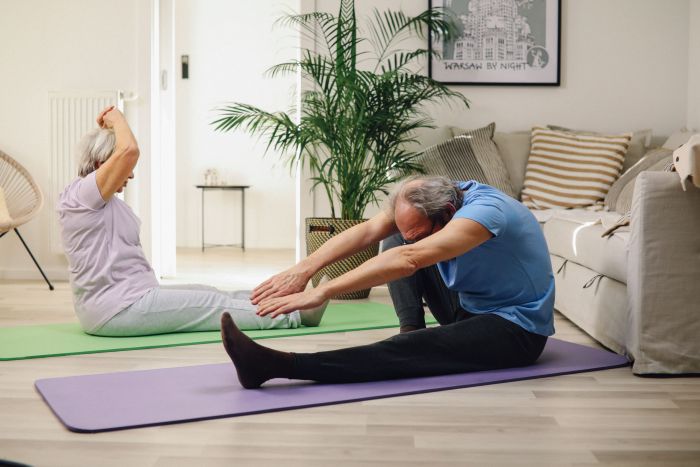
Very often professionals ignore the necessity of mobility training until the symptoms occur. Long hours spent at the computer often cause tightness of hips, rounded shoulders, stiff neck and lower back discomfort. Mobility exercises can help to solve these problems and to improve the movement quality.
You may imagine the mobility training as the lubrication of your body joints. If there is no regular maintenance, your body loses its ability to move freely and easily. Dynamic stretches, yoga and mobility drills help to increase flexibility and improve circulation and reduce the muscle tension.
Only 10 minutes of mobility training will change considerably your feeling of the whole day. You need to pay attention to the areas affected by the desk work including hips, hamstrings, shoulders, chest and thoracic spine. Continuous mobility training often leads to good posture, reduction of discomfort and improvement of exercise performance.
Busied professionals usually understand that mobility sessions are their secret weapon. They require low level of energy, bring immediate relief and create the base for further workouts.
Core-Focused Workouts
Strong core is not only about the abdominal muscles. Core is the supporting system of the body which is responsible for the posture, balance, stability and movement efficiency. Each time you lift an object, go upstairs and sit straight in the office – your core muscles work.
The core training is especially necessary for the professionals who spend a lot of time sitting at the desk. The weak core muscles often cause lower back discomfort and poor posture. The strength of this area is crucial for improved posture and everyday functionality.
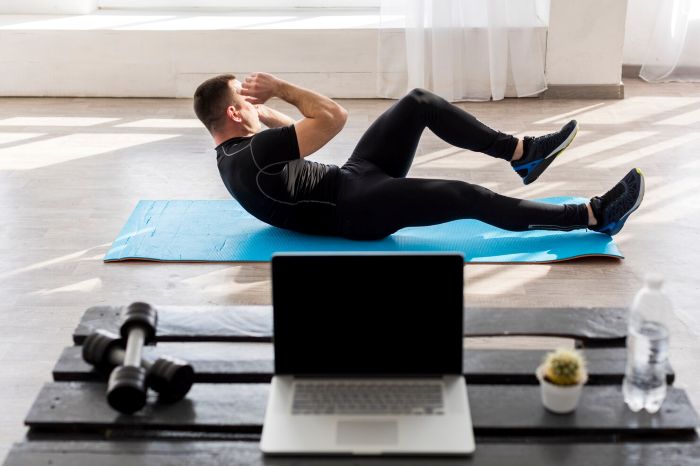
Planks, side planks, dead bugs, bicycle crunches and bird dogs are among the exercises for developing the core strength. These exercises are helpful for working the deep stabilizing muscles. Functional core exercises help to stabilize the spine and to prevent unwanted movements.
The 10-minute workout focused on core done three times per week will noticeably improve posture and movement quality. This is one of the most beneficial investment into your physical condition.
Walking and Cardio at Home
Walking is underestimated but very useful form of workout that helps to improve cardiovascular fitness, reduce stress, manage the weight and to increase mental clarity.
If outdoor walking is not possible, there are plenty of other ways to stay active even at home. Marching in place, stair climbing, dance workout, low impact cardio circuit training, walking workout video are the examples of cardio exercises which are very convenient.
Health authorities often emphasize the importance of any type of movement for better results. Even slight increase in activity can produce some benefits.
Professionals can easily incorporate movements in their daily routine. It is possible to walk during a phone call or do some cardio exercises before the work starts.
Micro Workouts Throughout the Day
One of the most promising trends in the field of physical activity is the popularity of micro workouts that are also called “exercise snacks”. Instead of the one workout, you can accumulate some amount of physical activity in several short sessions throughout the day.
There are many studies and recommendations that prove the effectiveness of the short exercise breaks. Such exercise breaks help to improve mood, circulation, cognition and metabolic health.
You can try the following schedule:
5 minutes of squats before breakfast
5 minutes of push-ups during work break
5 minutes of stair climbing after lunch
5 minutes of stretching before bed
As you can see, four five-minutes’ workouts equal 20 minutes of physical activity. For busy professionals, this strategy will be really helpful.
The most important thing is to be consistent. Small things done consistently produce better result than great ambitions.
Creating a Sustainable Routine
The most effective workout is not always the most complicated one. It is the one that you can keep up for a long period of time. The sustainability means that your exercise regime should correspond to your lifestyle and should not be vice versa.
One of the effective strategies is habit stacking. In other words, workouts should be combined with your daily activities. You may do the mobility exercises right after brushing your teeth. Do the HIIT session before the morning shower. Walk during conference calls. This will allow you to automatize your exercise routine.
Another important strategy is to lower the barrier to entering. You should keep your workout clothes accessible, make your exercise place and prepare the routine in advance. The easier it is to start exercising, the more chances you will have to start.
Professional individuals should focus on progress rather than perfection. One missed exercise will not cancel all your efforts before. Consistency over time is more important than one single session. Any kind of activity is better than nothing.
Conclusion
The idea that fitness involves long hours spent in the gym is outdated. The modern professionals can improve considerably their health and physical condition using efficient home workouts designed for demanding schedules. The HIIT workouts, bodyweight strength training, mobility exercises, core workouts, walking and micro workouts are among the ways of staying active at home.
The science proves that regular physical activity increases the physical health, mental performance, helps to manage stress and improves the quality of life. Health authorities recommend to perform at least 150 minutes of moderate physical activity and regular strength training per week.